
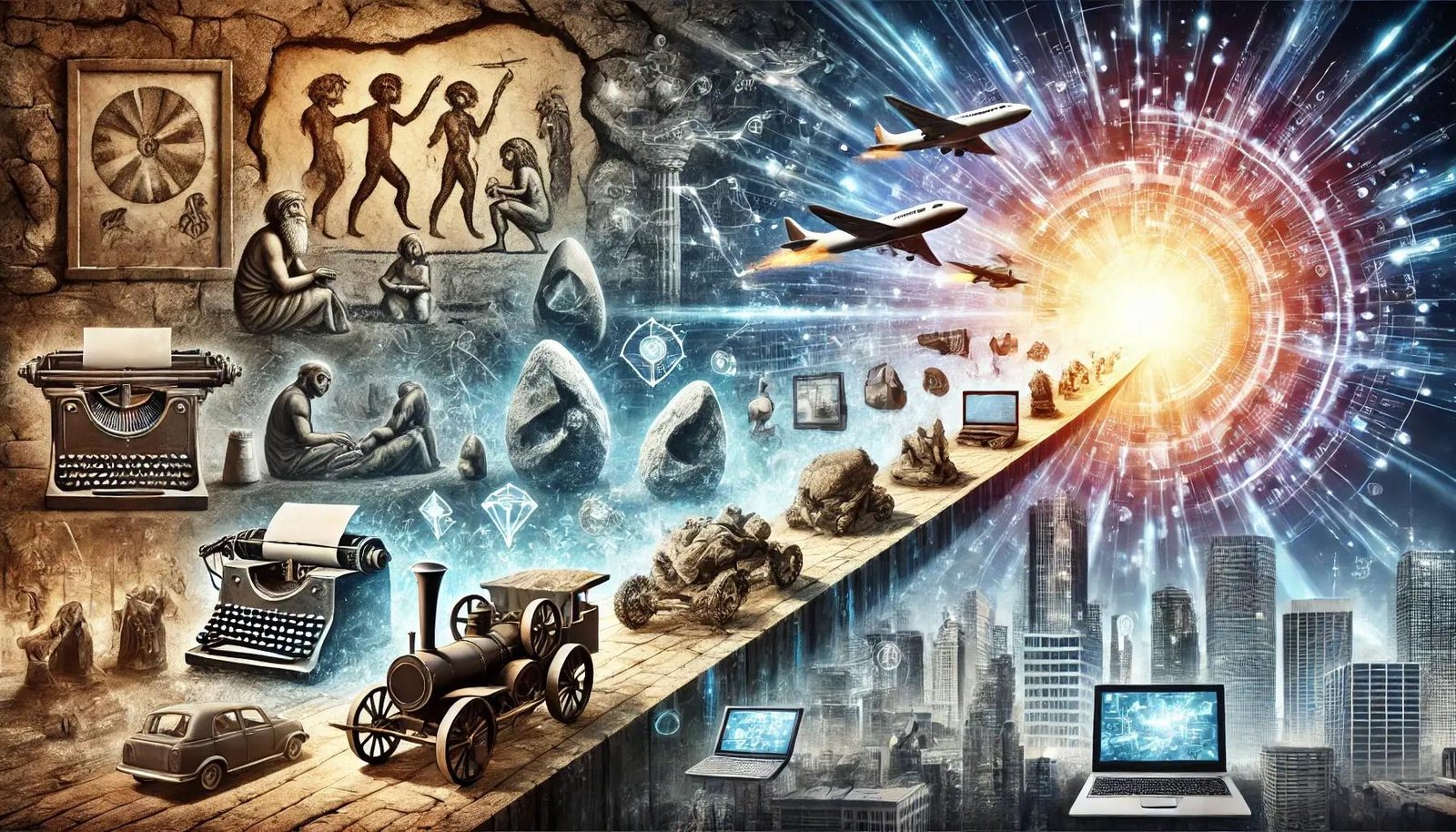

Technology is one of the most important parts of modern life, but have you ever wondered who created it? From the earliest stone tools to smartphones, computers and artificial intelligence, technology has developed through thousands of years of human creativity and problem-solving.
So, who created technology? No single person invented technology. It was developed gradually by early humans who discovered ways to make tools, solve everyday problems and improve their surroundings. Over time, inventors, scientists, engineers and researchers built upon these discoveries to create the technologies we use today.
Some of the most influential figures in the history of technology include Charles Babbage, often called the father of the computer, Ada Lovelace, an early pioneer of computer programming, Alan Turing, whose theoretical work shaped modern computing, and Tim Berners-Lee, who invented the World Wide Web.
Understanding who created technology means exploring how human inventions evolved and how they transformed communication, education, healthcare and business.
Who Created Technology?
Technology was not created by one individual. It is the result of continuous human innovation that began long before computers, electricity or modern machinery existed.
Early humans developed basic tools from stone, wood and other natural materials to make hunting, food preparation and survival easier. These inventions represented some of the earliest forms of technology.
As societies developed, people discovered new ways to use materials, generate energy, build structures, communicate information and solve increasingly complex problems.
Different inventors and civilizations contributed to different areas of technological development. For example:
- Early humans developed stone tools for everyday survival.
- Ancient civilizations introduced important advances in agriculture, construction, mathematics and communication.
- Charles Babbage designed pioneering mechanical computing engines.
- Ada Lovelace developed an early algorithm intended for a general-purpose computing machine.
- Alan Turing established important theoretical foundations of modern computing.
- Tim Berners-Lee invented the World Wide Web.
Therefore, technology should be understood as a collective achievement rather than the invention of one person.
When Was Technology First Invented?
Technology began millions of years ago, when early human ancestors started making tools to interact with their environment.
The Smithsonian Institution’s Human Origins Program identifies stone toolmaking dating back at least 2.6 million years. These early tools included hammerstones, stone cores and sharp flakes that could be used for cutting and processing materials.
The important point is that technology existed long before people began using the word itself.
As human knowledge expanded, technological developments became more sophisticated. People learned to work with metals, develop agricultural techniques, construct buildings, produce written records and create machines.
There is no single invention date for technology because it developed gradually across different societies and generations.
How Did Technology Evolve Throughout History?
The history of technology is a story of people identifying problems and finding increasingly effective ways to solve them.
Here are some of the most important stages in its development.
1. Early Human Technology: Stone Tools and Basic Inventions
The earliest technological developments were closely connected to survival.
Early humans created tools from stones and other natural materials. These tools helped them cut food, prepare animal hides, process materials and perform tasks that would otherwise have been difficult.
Over time, humans also developed more sophisticated techniques for making tools and using fire.
These early innovations established an important principle that still drives technology today: people create tools to make activities easier, safer and more efficient.

2. Ancient Civilizations and the Development of Practical Technology
As communities grew, technology became increasingly important in agriculture, construction, transportation and communication.
Ancient civilizations developed practical solutions that changed how people lived and worked.
Some important areas of progress included:
- Agriculture: Improved farming methods and irrigation systems supported larger communities.
- Construction: Engineering knowledge enabled the development of roads, buildings and monuments.
- Writing: Written communication made it possible to record information and share knowledge across generations.
- Mathematics: Mathematical developments supported trade, architecture, measurement and scientific progress.
- Transportation: Improvements in vehicles and mechanical systems helped people and goods travel further.
These developments created the foundations for more advanced engineering and scientific discoveries.
3. The Industrial Revolution: Machines Transform Human Work
The Industrial Revolution marked a major turning point in the history of technology.
Beginning in Britain during the 18th century, industrial development introduced new machinery, manufacturing methods and energy systems.
Steam power helped operate machinery and transportation systems, while factories changed how products were manufactured.
Instead of relying entirely on manual labour, businesses increasingly used machines to produce goods on a larger scale.
The Industrial Revolution also encouraged further developments in engineering, transportation, communication and manufacturing.
Its impact can still be seen in modern industries that depend on automation and advanced machinery.
4. The Development of Computers and Information Technology
One of the most significant developments in the history of technology was the creation of computers.
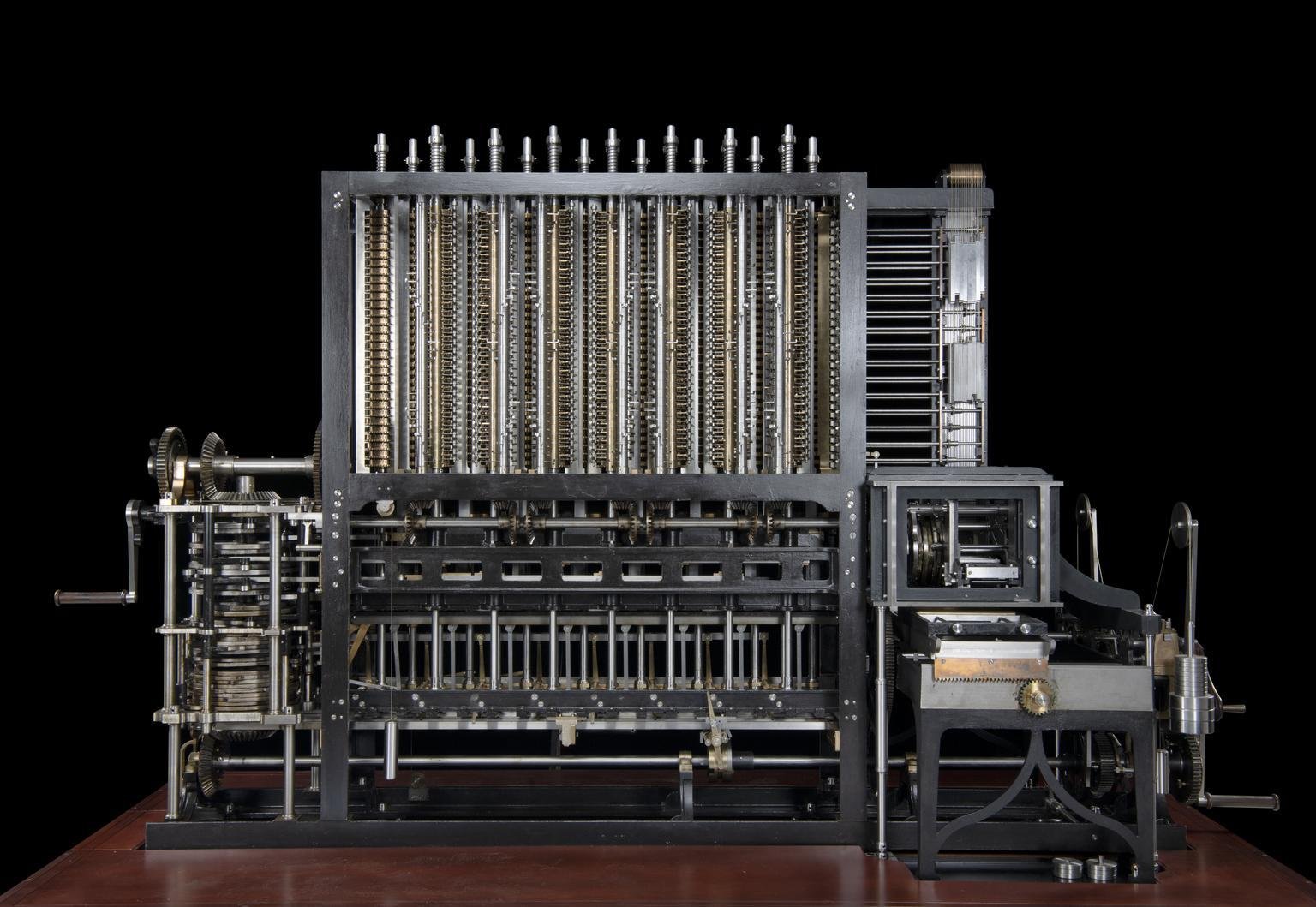
Charles Babbage, an English mathematician and inventor, designed the Difference Engine and later developed the concept of the Analytical Engine during the 19th century.
The Analytical Engine introduced ideas associated with general-purpose programmable computing, making Babbage one of the most important pioneers in computer history.
Ada Lovelace also played an important role. Her notes on the Analytical Engine included an algorithm intended to be carried out by the machine, which is why she is widely recognised as a pioneer of computer programming.
During the 20th century, electronic computing developed rapidly.
Scientists and engineers created machines capable of performing complex calculations, processing information and supporting increasingly sophisticated applications.
These developments established the foundations of modern information technology.
5. The Internet and the Digital Revolution
The development of computer networks changed how people communicate and share information.
The internet emerged from decades of networking research. One of its important early milestones was ARPANET, which connected its first four host computers in 1969.
Email also became an important development. Computer engineer Ray Tomlinson is credited with developing network email in 1971.
Another major breakthrough came in 1989, when British scientist Tim Berners-Lee invented the World Wide Web while working at CERN.
The World Wide Web made it possible to access interconnected information through websites and browsers.
It is important to understand that the internet and the World Wide Web are not the same thing. The internet is the underlying network infrastructure, while the Web is a system for accessing and sharing linked information through that network.
Together, these developments transformed communication, education, entertainment and business.

6. Modern Technology: Artificial Intelligence, Cloud Computing and Automation
Technology continues to evolve, with modern developments making information more accessible and business processes increasingly automated.
Some important examples include:
Artificial Intelligence (AI)
Artificial intelligence enables computer systems to perform tasks that traditionally require human intelligence, including recognising patterns, processing language and generating content.
Cloud Computing
Cloud computing allows individuals and organisations to access computing resources, applications and storage through network-based services rather than relying entirely on local hardware.
Cybersecurity
As organisations become more dependent on digital systems, cybersecurity has become essential for protecting sensitive information, business networks and online services.
Internet of Things (IoT)
IoT connects physical devices through networks, allowing them to collect and exchange information. Examples include smart sensors, connected industrial equipment and intelligent building systems.
Automation
Automation uses technology to perform repetitive tasks with less manual intervention. Businesses use it to improve workflows, reduce administrative work and increase operational efficiency.
These innovations demonstrate that technology is not simply about creating new devices. It is also about improving how people and organisations operate.
Who Were the Most Important People Behind Modern Technology?
Although nobody created technology alone, several individuals made important contributions to the development of modern computing and digital innovation.
Charles Babbage – The Father of the Computer
Charles Babbage (1791–1871) was an English mathematician and inventor who designed mechanical computing engines.
His Difference Engine was intended to automate mathematical calculations, while his Analytical Engine introduced concepts associated with programmable, general-purpose computers.
Although he did not complete a full working Analytical Engine during his lifetime, his designs became an important part of computer history.
Ada Lovelace – A Pioneer of Computer Programming
Ada Lovelace (1815–1852) worked on the mathematical ideas behind Charles Babbage’s Analytical Engine.
Her published notes included a detailed algorithm intended for the machine to calculate Bernoulli numbers.
Her contribution demonstrated that computing machines could potentially do more than perform ordinary numerical calculations.
She is widely recognised as a pioneer of computer programming.
Alan Turing – A Foundation of Modern Computing
Alan Turing (1912–1954) was a British mathematician and computer scientist.
In 1936, he described an abstract computing model now known as the Turing machine. His theoretical work helped establish the foundations of computer science and the concept of general-purpose computation.
During the Second World War, he also contributed to codebreaking efforts at Bletchley Park.
His work continues to influence computer science and artificial intelligence.
Konrad Zuse – An Early Computer Developer
Konrad Zuse (1910–1995) was a German engineer who developed the Z3 in 1941.
The Z3 is widely recognised as an early working, automatic, programmable digital computer.
His work represented an important milestone in the development of computing technology.
Tim Berners-Lee – The Inventor of the World Wide Web
Tim Berners-Lee invented the World Wide Web in 1989 while working at CERN.
He developed the fundamental technologies that made it possible to connect documents through hyperlinks and access information using web browsers.
His contribution transformed the internet into an accessible information-sharing platform used around the world.
Important Milestones in the History of Technology
The following timeline highlights some major developments that helped shape modern technology.
| Period or year | Technological development |
|---|---|
| At least 2.6 million years ago | Early stone toolmaking |
| Ancient civilizations | Advances in agriculture, writing and engineering |
| 18th century | Industrial Revolution and mechanised manufacturing |
| 1820s–1830s | Charles Babbage develops mechanical computing engine designs |
| 1840s | Ada Lovelace publishes notes containing an early computer algorithm |
| 1936 | Alan Turing describes the theoretical universal computing machine |
| 1941 | Konrad Zuse completes the Z3 computer |
| 1940s | Electronic digital computers develop |
| 1969 | ARPANET connects its first four host computers |
| 1971 | Ray Tomlinson develops network email |
| 1989 | Tim Berners-Lee proposes the World Wide Web |
| 1990s | The Web expands into public and commercial use |
| 2000s | Smartphones and online services become increasingly widespread |
| 2010s | Cloud services, connected devices and AI applications expand |
| 2020s | Generative AI and advanced automation accelerate digital innovation |
This timeline is not a complete list of every invention. It highlights selected milestones that illustrate how technology developed from basic tools into interconnected digital systems.
How Has Technology Changed the Modern World?
Technology has transformed almost every part of modern society.
Its influence extends beyond computers and smartphones. It affects how people learn, communicate, receive healthcare, travel and conduct business.
Communication
People can now communicate across countries through messaging platforms, video conferencing and digital collaboration tools.
Education
Online learning platforms, digital libraries and educational software have made information and learning resources more accessible.
Healthcare
Modern medical technology supports diagnostic imaging, electronic health records, remote consultations and advanced medical research.
Business and Industry
Businesses use technology to manage information, automate processes, communicate with customers and improve operational efficiency.
Transportation
Navigation systems, vehicle sensors, intelligent traffic management and advanced manufacturing have transformed transportation.
The biggest change is that technology has moved from being an optional convenience to an essential part of everyday life and business operations.
Why Is Information Technology Important for Modern Businesses?
Understanding the history of technology also helps explain why information technology has become essential for modern organisations.
Businesses increasingly depend on computers, networks, cloud platforms, software and digital communication systems to operate effectively.
However, simply purchasing technology is not enough. Organisations must also ensure that their systems are reliable, secure and properly maintained.
Some of the most important business requirements include:
1. Reliable IT infrastructure
Computers, servers, networks and software need to work together to support daily business operations.
2. Data protection and cybersecurity
Businesses must protect confidential information against unauthorised access, cyberattacks and data loss.
3. Efficient IT management
Proper IT management helps organisations maintain systems, resolve technical issues and minimise operational disruption.
4. Digital transformation
Businesses can use modern technologies to improve workflows, enhance customer experiences and adapt to changing market requirements.
5. Future-ready technology
Organisations need to evaluate new technologies carefully and invest in solutions that support their long-term business objectives.
Technology delivers the greatest value when it solves real business problems rather than simply introducing more complicated systems.

What Does the Future of Technology Look Like?
The future of technology will be shaped by continued innovation in artificial intelligence, automation, cloud computing, cybersecurity and connected devices.
Artificial intelligence is already changing how organisations process information, communicate with customers and perform repetitive tasks.
Cloud infrastructure is also evolving, allowing businesses to access more flexible computing resources.
At the same time, cybersecurity will become increasingly important as more systems, devices and business operations become interconnected.
Future technological progress will not depend on one inventor. It will continue to emerge through collaboration between researchers, engineers, businesses and technology professionals.
Organisations that understand these developments will be better prepared to make informed decisions about their technology investments.
Frequently Asked Questions About Who Created Technology
1. Who created technology first?
No single person created technology. Early humans developed the first known stone tools at least 2.6 million years ago, marking some of the earliest documented examples of human technology.
2. Who is known as the father of technology?
There is no universally recognised father of all technology. Charles Babbage is commonly called the father of the computer because of his pioneering mechanical computing engine designs.
3. Who invented modern technology?
Modern technology was developed through the combined contributions of scientists, engineers, mathematicians and inventors across different generations. Important contributors include Charles Babbage, Ada Lovelace, Alan Turing and Tim Berners-Lee.
4. When did technology begin?
Technology began in prehistoric times. Evidence from the Smithsonian Institution identifies stone toolmaking dating back at least 2.6 million years.
5. Who invented the first computer?
Charles Babbage designed pioneering mechanical computing engines in the 19th century. However, the first computers emerged through the work of several engineers and research teams during the 20th century. The answer depends on whether you mean mechanical, programmable, electronic or general-purpose computers.
6. Who invented the internet?
The internet was not invented by one person. It developed through the contributions of numerous researchers and engineers working on computer networking. ARPANET was an important precursor to the modern internet.
7. Who invented the World Wide Web?
Tim Berners-Lee invented the World Wide Web in 1989 while working at CERN. He developed the core concepts and technologies that allowed information to be connected through websites and hyperlinks.
8. What is the difference between technology and information technology?
Technology is a broad term covering tools, systems, machines and techniques developed to solve problems. Information technology (IT) specifically focuses on using computers, software, networks and digital systems to store, process, manage and communicate information.
9. Why is technology important today?
Technology helps people and organisations communicate, access information, solve problems, automate tasks and improve productivity. It is particularly important for businesses that depend on digital infrastructure and secure information systems.
10. What are the most important technologies today?
Some of the most influential modern technologies include artificial intelligence, cloud computing, cybersecurity, automation, the Internet of Things and advanced computer systems.
Final Thoughts: Technology Is a Collective Human Achievement
So, who created technology? The answer is not one inventor, one civilisation or one historical event.
Technology is the result of millions of years of human curiosity, experimentation and problem-solving. From the earliest stone tools to modern computers and artificial intelligence, every generation has contributed something new.
People such as Charles Babbage, Ada Lovelace, Alan Turing and Tim Berners-Lee helped shape the digital world we depend on today.
As technology continues to evolve, its real value will remain the same: helping people solve problems, share knowledge and accomplish things that were once impossible.
For modern businesses, understanding and adopting the right technology is an important step towards building more secure, efficient and resilient operations.