


Why Is Technology Important? 10 Ways It Improves Everyday Life and Business
Technology is important because it helps people solve problems, communicate faster, access information, improve productivity, and make everyday activities easier. From smartphones and online banking to artificial intelligence and modern business systems, technology influences how individuals, organizations, and societies function.
Today, technology is no longer limited to computers or advanced electronic devices. It has become part of education, healthcare, transportation, communication, entertainment, and almost every modern industry.
But why is technology so important in everyday life? What benefits does it provide, and how does it influence the way businesses and individuals work?
Understanding the importance of technology helps us make better decisions, adapt to changes, and use digital tools more effectively.
What Is Technology and Why Does It Matter?
Technology refers to the tools, systems, machines, software, and methods that people develop to solve problems and perform tasks more efficiently.
It includes both traditional inventions and modern digital innovations. A simple bicycle, a medical scanner, a smartphone, and an artificial intelligence system are all examples of technology because each serves a practical purpose.
Information technology (IT), on the other hand, focuses specifically on using computers, software, networks, and digital systems to store, process, manage, and share information.
Technology matters because it helps people accomplish tasks that would otherwise require more time, effort, resources, or specialized knowledge.
For example, students can attend online classes, businesses can communicate with international customers, and individuals can manage financial transactions through digital platforms.
The real importance of technology is not simply having access to modern devices. It is the ability to use the right tools to improve people’s lives and solve meaningful problems.
Why Is Technology Important in Everyday Life?
Technology has transformed everyday activities by making information, communication, services, and opportunities more accessible.
Here are ten important ways technology improves modern life and business.
1. Technology Makes Communication Faster and Easier
Communication is one of the most significant benefits of modern technology.
In the past, communicating with someone in another country often required letters or expensive international phone calls. Today, smartphones, messaging applications, email, and video conferencing allow people to connect almost instantly.
Technology has improved communication in several ways:
- Instant messaging makes everyday conversations easier.
- Video conferencing connects people across different locations.
- Email allows businesses to exchange information professionally.
- Social media helps individuals and organizations reach wider audiences.
- Collaboration platforms allow teams to share documents and work together.
For example, a company can organize a virtual meeting with employees in different countries without requiring everyone to travel to the same location.
Why does this matter?
Faster communication reduces delays, improves teamwork, and makes personal and professional relationships easier to maintain.
2. Technology Improves Productivity and Saves Time
Time is one of the most valuable resources for individuals and businesses.
Technology helps people complete routine tasks more quickly through automation, digital applications, and efficient workflows.
Consider a business that previously managed invoices, employee records, and customer information manually. These activities could consume several hours and create opportunities for human error.
With suitable software, many of these processes can be organized and automated.
Some common examples include:
- Automated appointment scheduling.
- Digital document management.
- Online project management systems.
- Automated email notifications.
- Software for accounting and reporting.
- AI-powered tools for repetitive tasks.
Technology does not automatically make every task faster. Poorly selected applications, complicated systems, and unnecessary notifications can create additional work.
The best results come from identifying repetitive activities and choosing tools that genuinely simplify them.
Practical solution: Start by identifying the tasks that consume the most time, then evaluate whether automation or digital software can reduce unnecessary work.
3. Technology Makes Education More Accessible
Education has changed significantly because of the development of digital technology.
Students no longer depend entirely on physical classrooms, printed textbooks, or traditional learning materials. They can access online courses, digital libraries, educational videos, and interactive learning platforms.
Technology supports education through:
- Online classes and virtual classrooms.
- Digital textbooks and research materials.
- Educational applications.
- Interactive learning tools.
- Online examinations and assessments.
- AI-assisted learning and research.
For example, someone living in a remote area can learn programming, improve language skills, or study business through online educational platforms.
Teachers can also use digital tools to organize lessons, share resources, and provide feedback.
However, access to technology does not guarantee quality education. Students still need reliable information, digital literacy, and guidance from qualified educators.
Technology works best in education when it supports effective teaching rather than replacing meaningful human interaction.
4. Technology Improves Healthcare and Medical Services
Healthcare is another area where technology has made a considerable difference.
Modern medical systems use digital tools to support patient management, medical research, communication, and diagnosis.
Important examples include:
- Electronic health records.
- Telemedicine consultations.
- Digital appointment systems.
- Medical imaging equipment.
- Remote patient monitoring.
- Healthcare data management.
For instance, telemedicine can help patients consult healthcare professionals without always traveling to a hospital or clinic.
Digital records can also help authorised medical professionals access relevant patient information more efficiently.
Medical technology can improve access and support better healthcare decisions, but patient privacy, data security, and professional medical judgment remain essential.
The purpose of healthcare technology is to support medical professionals and improve patient care.

5. Technology Supports Business Growth and Innovation
Modern businesses depend on technology to manage operations, communicate with customers, analyze information, and remain competitive.
Whether a company operates locally or internationally, suitable digital systems can help it improve efficiency and respond to changing customer expectations.
Technology supports business growth through:
Better customer management: Customer relationship management (CRM) software helps businesses organize customer information, track interactions, and manage sales activities.
Digital marketing: Websites, search engines, email marketing, and social media help organizations reach potential customers.
Improved operations: Business software can simplify accounting, inventory management, reporting, and administration.
Remote collaboration: Cloud-based applications allow employees to work together from different locations.
Innovation: Digital tools help organizations test ideas, develop products, and explore new business opportunities.
For example, a small business can use an online store to reach customers outside its local area without opening physical branches in every location.
However, buying more software does not necessarily produce business growth. Technology investments should support clear business objectives and measurable improvements.
6. Technology Improves Access to Information and Knowledge
Access to information is another reason technology has become essential.
The internet provides access to educational resources, research publications, news, tutorials, professional guidance, and digital libraries.
People can research unfamiliar subjects, compare information, and develop new skills without depending entirely on traditional information sources.
Technology also helps businesses collect and organize information that supports planning and decision-making.
For example, a business owner can analyze customer feedback, review sales reports, and identify changes in customer behavior before making important decisions.
However, not everything published online is accurate.
Misinformation, outdated information, and misleading content can influence decisions. Users should check the credibility of sources and compare important information before relying on it.
Access to information becomes valuable when people know how to evaluate and apply it.
7. Technology Strengthens Security and Protects Information
As more personal and business activities move online, protecting information has become increasingly important.
Cybersecurity technology helps individuals and organizations reduce the risks associated with data theft, unauthorized access, phishing, malware, and other digital threats.
Some important security practices include:
- Using strong and unique passwords.
- Enabling multi-factor authentication.
- Keeping software and devices updated.
- Using secure networks.
- Backing up important information.
- Training employees to recognize suspicious messages.
Businesses can also use firewalls, endpoint protection, encryption, access controls, and security monitoring systems.
For example, multi-factor authentication adds another verification step when someone attempts to access an account.
The National Institute of Standards and Technology (NIST) provides the Cybersecurity Framework 2.0, which organizations can use to understand and manage cybersecurity risks.
Technology can strengthen security, but no digital system is completely risk-free. Regular updates, responsible user behavior, and appropriate security policies are equally important.
8. Technology Improves Transportation and Connectivity
Transportation has become more efficient and accessible through technological developments.
Modern vehicles, navigation systems, digital ticketing, traffic management platforms, and connected transport services help people travel and manage journeys.
Examples include:
- GPS navigation applications.
- Real-time traffic updates.
- Online flight and train reservations.
- Digital payment systems.
- Vehicle safety technologies.
- Intelligent transport management.
For example, navigation applications can help drivers identify alternative routes when traffic conditions change.
Businesses also benefit from transportation technology through delivery tracking, logistics management, and supply chain monitoring.
These developments can save time, improve coordination, and support more efficient transportation systems.
9. Technology Encourages Creativity and New Opportunities
Technology provides people with new ways to create, communicate, experiment, and develop ideas.
Digital design software, video editing applications, programming tools, and artificial intelligence platforms have made creative resources accessible to more people.
Individuals can now:
- Create digital artwork and visual content.
- Develop websites and mobile applications.
- Publish educational videos.
- Build online businesses.
- Learn programming and technical skills.
- Collaborate on creative projects.
For entrepreneurs, technology can reduce some barriers to launching new products and services.
A person with a useful idea can create a website, build an online presence, and connect with potential customers without immediately investing in a traditional physical business.
Technology does not replace creativity. It provides additional tools that help people turn ideas into practical results.
10. Technology Helps Society Prepare for the Future
Technology continues to influence how societies develop and respond to new challenges.
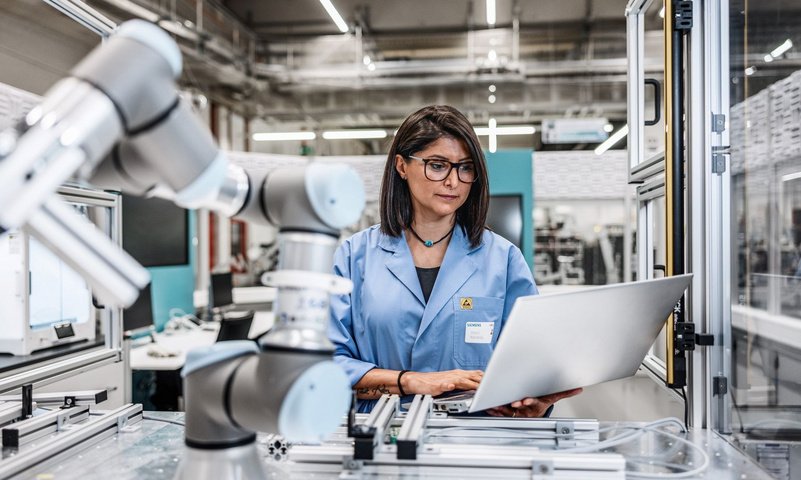
Artificial intelligence, cloud computing, robotics, automation, renewable energy systems, and connected devices are changing the way people work and interact with their surroundings.
Some important developments include:
Artificial Intelligence: AI systems can analyze information, recognize patterns, assist with content creation, and support decision-making.
Cloud Computing: Cloud platforms allow users and organizations to access computing resources, applications, and stored information over the internet.
Internet of Things (IoT): Connected devices collect and exchange information to support monitoring and automation.
Robotics: Robots can perform repetitive, precise, or physically demanding tasks in different industries.
Automation: Automated systems help reduce repetitive manual work and improve operational consistency.
These developments create new opportunities, but they also introduce challenges involving privacy, security, employment, digital skills, and responsible technology use.
Preparing for the future requires learning new skills, evaluating emerging technologies, and understanding both their benefits and limitations.
How Does Technology Solve Real-World Problems?
The importance of technology becomes clearer when we examine the problems it helps people solve.
| Everyday problem | Technology-based solution | Practical benefit |
|---|---|---|
| Slow communication | Messaging and video calls | Faster communication |
| Manual paperwork | Digital document systems | Better organisation |
| Limited learning resources | Online education | More learning opportunities |
| Difficult business management | Business software | Improved workflows |
| Security threats | Cybersecurity tools | Better protection |
| Time-consuming tasks | Automation | Reduced repetitive work |
| Limited customer reach | Digital platforms | Wider market access |
| Travel difficulties | GPS and navigation | Better route planning |
The most effective technology is not necessarily the newest or most expensive. It is the technology that addresses a real problem and provides measurable value.
What Are the Disadvantages of Technology?
Although technology offers many advantages, it also creates challenges that individuals and organizations should understand.
Ignoring these disadvantages can lead to unnecessary risks and dependence on digital systems.
1. Privacy and Security Risks
Digital platforms collect and process information. If this information is not properly protected, it may be exposed through cyberattacks, weak passwords, or unauthorized access.
Solution: Use strong passwords, enable multi-factor authentication, review privacy settings, and keep devices updated.
2. Technology Dependence
Excessive reliance on digital devices can affect concentration, productivity, and everyday routines.
Solution: Establish healthy technology habits and use digital tools with a clear purpose.
3. Job Displacement and Changing Skills
Automation and artificial intelligence can change the responsibilities associated with certain jobs.
Solution: Invest in continuous learning and develop digital, analytical, communication, and problem-solving skills.
4. Digital Inequality
Not everyone has equal access to affordable internet services, modern devices, or digital education.
The International Telecommunication Union (ITU) continues to highlight global connectivity gaps, demonstrating that the benefits of technology are not equally accessible to everyone.
Solution: Support digital education, improve connectivity, and make digital services more accessible.
5. Technical Problems and System Failures
Software errors, hardware failures, network interruptions, and cyber incidents can disrupt important activities.
Solution: Maintain reliable backups, update systems regularly, and prepare recovery plans for important digital services.
Understanding these limitations helps people use technology more responsibly and benefit from it without overlooking potential risks.
How Can Individuals and Businesses Use Technology More Effectively?
Technology provides the greatest value when people choose tools based on their actual needs.
Here are some practical steps:
- Identify the problem before selecting a technology.
- Compare available tools and their features.
- Consider affordability, reliability, and security.
- Learn how to use the selected technology correctly.
- Protect personal and business information.
- Review performance and make improvements when necessary.
For businesses, it is also important to ensure that technology investments support long-term goals rather than introducing unnecessary complexity.
A well-planned digital strategy can help organizations improve efficiency, manage risks, and adapt to changing customer expectations.
What Is the Future Importance of Technology?
Technology will continue to influence everyday life, education, business, communication, and economic development.
Artificial intelligence is expected to play an increasingly important role in information processing and automation. Cloud computing will continue to support flexible digital infrastructure, while cybersecurity will remain essential as more activities move online.
Digital skills will also become increasingly valuable as workplaces adopt new systems and processes.
However, future progress should not be measured only by how advanced technology becomes. Its real value will depend on whether it solves meaningful problems, improves accessibility, protects people, and creates useful opportunities.
The future belongs to people and organizations that understand how to adopt technology thoughtfully and responsibly.
Frequently Asked Questions About the Importance of Technology
1. Why is technology important in everyday life?
Technology is important in everyday life because it makes communication, learning, shopping, banking, transportation, and access to information easier. It helps people save time, complete tasks efficiently, and connect with opportunities around the world.
2. What are the five main benefits of technology?
Five major benefits of technology include:
- Faster communication.
- Improved productivity.
- Easier access to information.
- Better healthcare and education services.
- Greater opportunities for innovation and business growth.

3. Why is information technology important?
Information technology is important because it helps individuals and organizations store, process, manage, protect, and share information. It supports business operations, digital communication, data management, and modern services.
4. How does technology improve business productivity?
Technology improves business productivity by automating repetitive activities, organising information, supporting communication, simplifying project management, and helping employees make informed decisions.
5. What is the role of technology in education?
Technology supports education through online learning platforms, digital libraries, educational applications, virtual classrooms, and interactive learning resources. It makes educational materials more accessible and provides additional ways to develop knowledge and skills.
6. How does technology improve communication?
Technology improves communication through messaging applications, email, video conferencing, social media, and collaborative platforms. These tools allow individuals and organizations to exchange information quickly, regardless of their location.
7. What are the disadvantages of technology?
The main disadvantages include privacy concerns, cybersecurity threats, digital dependence, job displacement, unequal access to technology, and technical failures. Responsible use and appropriate security practices can help reduce these risks.
8. Why is technology important for the future?
Technology is important for the future because it supports innovation, automation, scientific research, digital education, business development, and improved services. It also helps societies respond to changing needs and emerging challenges.
9. How does technology affect society?
Technology affects society by changing how people communicate, work, learn, access services, and share information. It creates opportunities for development while also introducing challenges related to privacy, employment, and digital inequality.
10. Can technology solve every problem?
No. Technology can help solve many problems, but it cannot replace human judgment, creativity, empathy, and responsible decision-making. Its effectiveness depends on how well people understand and apply it.
Conclusion: Technology Is Essential for a Better Connected World
Technology has become an important part of modern life because it helps people communicate, access information, improve productivity, develop new skills, and solve everyday problems.
From education and healthcare to business operations and global communication, its influence can be seen across almost every industry.
However, the real value of technology depends on how responsibly and effectively it is used. Individuals should develop digital skills, protect their information, and choose tools that genuinely improve their lives.
Businesses should focus on practical digital solutions that support efficiency, security, innovation, and long-term growth.
As technology continues to evolve, understanding its importance will help individuals and organizations make smarter decisions and prepare for an increasingly connected future.
At The Hackett Group, we explore technology, artificial intelligence, cybersecurity, and digital innovation to help readers understand the developments shaping our world.